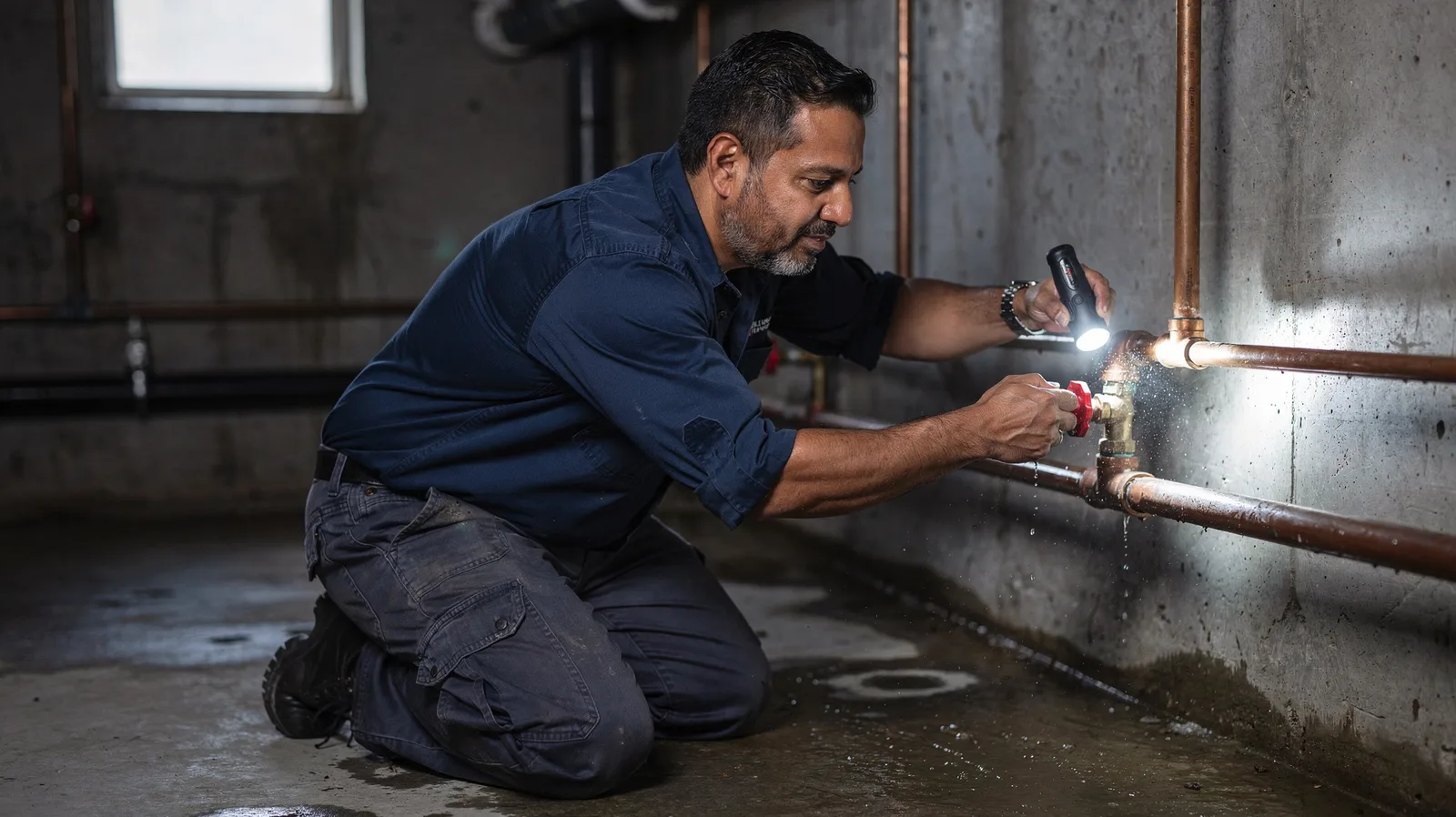
A puddle under a water heater can come from a loose fitting that takes a wrench to fix, or from a tank that has rusted through. The steps below keep the damage small either way.
Make it safe
- Electric: switch off the heater's breaker. Gas: turn the control knob to pilot or off.
- Close the cold-water valve on the pipe entering the top of the tank. If it will not turn, close the house main.
- If the tank is leaking steadily, connect a garden hose to the drain valve near the bottom and run it to a floor drain or outside. The water inside can be scalding, so open the valve slowly and stay clear.
Where is it coming from?
- Top of the tank: loose inlet or outlet connections or a failing flex connector. Usually repairable.
- Relief valve pipe: the temperature and pressure relief valve is releasing water. That can mean too much pressure or heat, or a worn valve. Have it checked. It is a safety device, not a nuisance.
- Drain valve: a dripping plastic drain valve can be replaced.
- Bottom seam or tank body: the inner tank has corroded. This cannot be patched; the heater needs replacing.
What happens next
If the heater has to be replaced, the plumber will size the new unit, confirm venting and gas or electric supply, and add a drain pan and expansion tank where local code calls for them. Heaters in attics or upstairs closets in Java, VA should always sit in a pan piped to a drain, since a slow leak there reaches ceilings below.