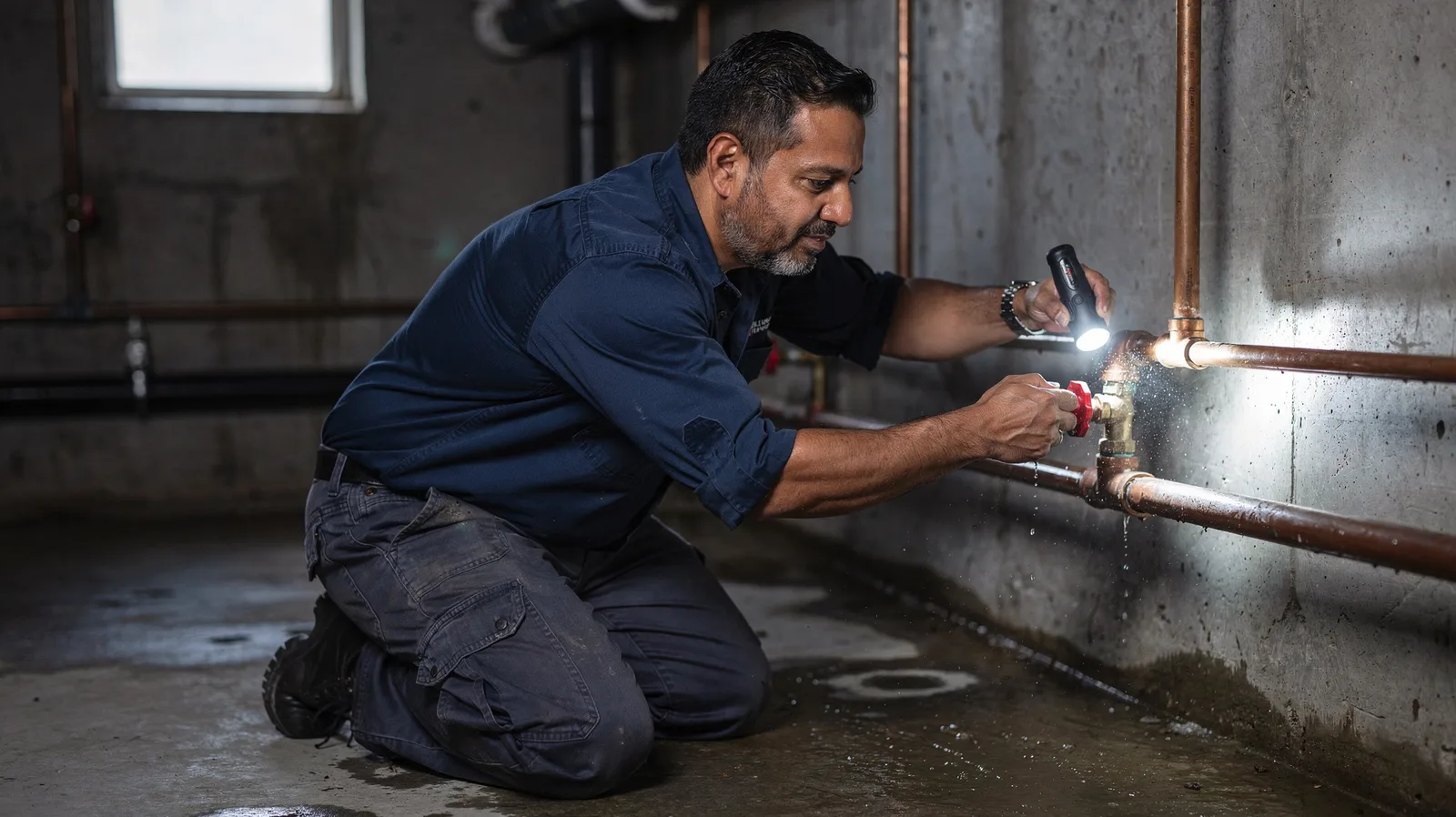
Supply lines are the short flexible hoses that connect sinks, toilets, dishwashers, ice makers and washing machines to the water pipes. They sit under constant pressure, and a burst washing-machine hose is one of the most common causes of indoor water damage. Most failures start small: a bead of water at a nut, a bulge in the braid, or rust on the crimped ends.
What to do when one lets go
- Close the small stop valve the hose connects to. For a washer, close both the hot and cold valves in the wall box.
- If the stop valve will not turn or is the part leaking, close the house main.
- Unplug the washer or dishwasher before reaching behind it, and keep towels down until the floor is dry.
Repair options
A plumber replaces the failed line with a stainless-braided connector of the right length, so it is not stretched or kinked. If the stop valve is an old multi-turn valve, it is worth replacing with a quarter-turn stop at the same visit. For ice makers fed by thin plastic tubing, a braided line is less likely to split.
Preventing the next one
- Check hoses under sinks and behind appliances once a year for bulges, rust or dampness.
- Replace rubber washer hoses on a regular schedule, or switch to braided ones.
- Consider a leak sensor with an automatic shut-off valve near the washer or water heater.
Fixflow Plumbing books local plumbers in Java, VA who can replace every supply line in a house in one visit, which is often sensible once one has failed.